A reflection practice to carry
- Notice: Which sentence or idea remains with you?
- Name: What does it illuminate in your present life?
- Move: Which humane action could give that insight form?
The role of the book
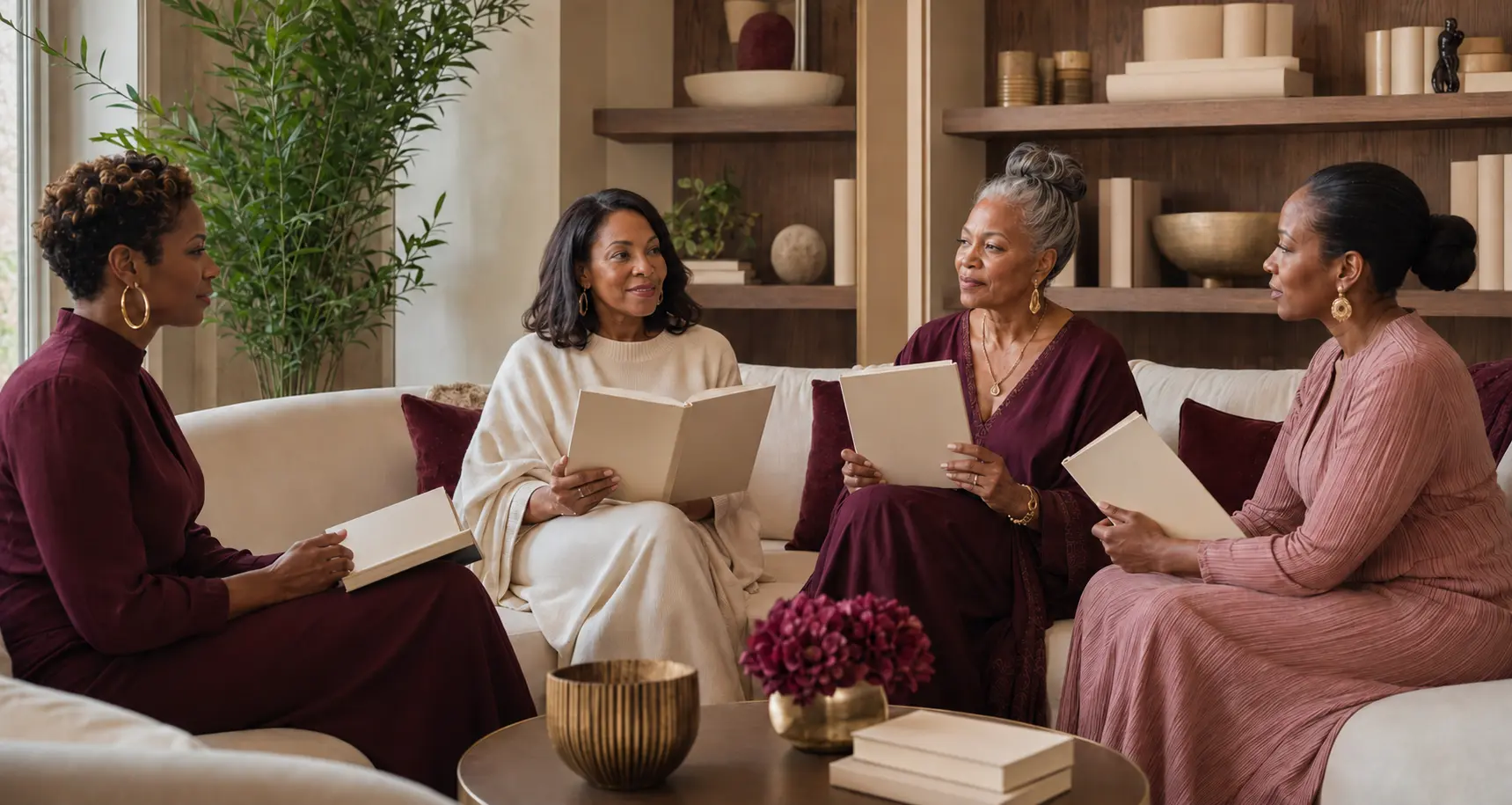
In both experiences, the book creates common ground. A conventional club may focus on plot, argument, character, craft, and reader opinion. A guided reading community keeps those conversations and adds a second inquiry: What has this work made visible within us and among us?
The text remains central while personal meaning develops around it.
The rhythm between meetings
A reading community offers continuity between gatherings. Companion prompts, progress cues, private intentions, selected passages, and creative practices help the monthly theme remain alive.
This rhythm serves readers who process through writing before speaking. It also gives independent participants a complete pathway.
The quality of gathering
Community agreements make the purpose tangible. Participants listen generously, speak from experience, protect confidentiality, preserve the freedom to pass, and seek consent before advice. Facilitators guide movement from observation to meaning and integration.
The gathering becomes a place for literary intelligence, emotional truth, and varied interpretation.
The invitation after the final page
A guided reading community closes each cycle by asking what the insight makes possible. The response may be a boundary, conversation, creative act, restorative choice, question to carry, or renewed way of seeing.
For readers seeking connection and reflection alongside books, the community becomes part of the reading itself.
Common questions
Can a traditional book club become a reading community?
Yes. Add companion reflection, clear agreements, a consistent gathering flow, and an integration practice.
Is a reading community therapy?
It is an educational and reflective experience with clear scope and appropriate pathways to professional support.
Can members participate independently?
A well-designed reading community can support both shared gatherings and a complete private pathway.
Continue the unfolding
Enter the October journey, write through the companion prompts, and carry one honest insight into lived movement.
Explore Becoming Through Alignment